Dokbo Geongon
A traditional Korean wuxia in which No Dokhaeng — sole heir of the legendary Musangryu — steps into the Jianghu to carry out his revenge.
Synopsis
Dokbo Geongon is one of the canonical works by Yong Daeun — the strand of Korean orthodox wuxia at its weightiest. Without modern devices like regression or system mechanics, the work confronts head-on a single person's revenge, the friendships and the love built along the way, and the masculine pride that carries all of them. At the center of the story is No Dokhaeng (老毒行), the sole heir of the legendary single-line-transmission sect Musangryu (無雙流). After completing his martial training, he steps into the Jianghu and is bound by the sect's law to test himself in duels against the era's top masters. But layered on top of those duels is a deeper, older grudge that he and his sect both carry. The work centers on No Dokhaeng's revenge while also drawing the friendships, the love, and the distinctive 'masculine pride' of the Jianghu that he meets along the road. With the breath of orthodox wuxia, it shows how a single person carries friendship, longing, vengeance, and self-respect all at the same time on the edge of one blade. Musangryu's martial-arts portrayal is itself a core part of the work. The grain of an art that thinks of nothing but defeating its opponent — 'ultra-realistic combatism' (超實戰主義) — collides with the Jianghu's many sects and traditions, and through those collisions the place of the Musangryu line in the broader martial world is gradually revealed. In the end, Dokbo Geongon takes head-on the oldest premise of wuxia — 'a single person walks the Jianghu' — and stands as one of the most recommended starting points for readers who want to anchor the bones of Korean orthodox wuxia firmly.
Personal Review Editor's Opinion
The following is the site operator's personal opinion and may differ from the original author's intent.
I personally have a deep affection for the revenge genre. If I had to name the work I hold closest, it would be Alexandre Dumas's The Count of Monte Cristo — a story where a single person, holding the precise memory of everything that destroyed them, slowly and meticulously unties every knot and reorganizes the world with one final, decisive stroke. That breath is what I love.
Dokbo Geongon takes that 'Count-of-Monte-Cristo grain of revenge' and renders it through the breath of Korean orthodox wuxia. From the moment No Dokhaeng steps into the Jianghu carrying the deep grudge that he and his sect bear, the work refuses to flatten into a 'who-beats-whom' duel narrative. Instead, it builds up — carefully — what he has prepared in order to face a single person, and how much time and resolve have accumulated behind a single sword stroke.
What I particularly liked is that the revenge is never reduced to a simple 'explosion of anger.' No Dokhaeng is unmistakably a man of macho pride, but inside that pride sit responsibility toward the sect that raised him, friendships made on the road, and a heart turned toward someone. All of those weights are carried on the edge of his sword as he closes in on his target, so no single stroke ever feels light. The way the Count of Monte Cristo dragged the entire personhood of Dantès behind every move — No Dokhaeng's blade does the same with the years he has lived through.
The portrayal of Musangryu, the single-line-transmission sect, fits this emotional register beautifully. Its grain — 'thinking only of defeating the opponent' — places weight on the precise final stroke rather than on flourish. In a revenge story, the most important thing is, in the end, the final blow; and Musangryu's grain shows the most honest answer to how that final stroke is built.
I strongly recommend this to readers who love revenge stories — and especially to those who love the kind of revenge that isn't a one-time explosion but a precise tying-off of knots that have accumulated over time. Among Korean wuxia, this is one of the closest reads I know to the grain of The Count of Monte Cristo.
Genre, characters, factions, and theme details are currently available only on the Korean page. View the Korean detail →
Gallery AI-generated / Free license
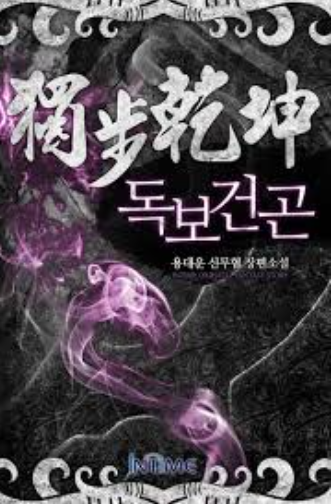 Cover image