Gunrim Cheonha
A flagship of Korean orthodox wuxia in which Jin Sanwol works to rebuild the fallen Zhongnan Sect amid the great currents of the Jianghu.
Synopsis
Gunrim Cheonha is a flagship work by Yong Daeun — the Korean orthodox-wuxia novel that has carried the genre's breath the longest. Beginning serialization in Sports Today in March 2000 and continuing for over 25 years, it works without modern devices like regression or system mechanics, tracing in the orthodox grain how a single sect — once fallen from the center of the Wulim — rises to its feet again. At the center of the story is Jin Sanwol of the Zhongnan Sect (終南派). Once part of the Nine Schools and One Sect of the Orthodox order, the Zhongnan Sect has decayed across long years and drifted from the center of the martial world. Returning his sect to the great stage of the Jianghu is the duty Jin Sanwol carries. This narrative of sect reconstruction does not advance through raw martial power — it accumulates slowly through faith, bonds, and decisions made between people. The greatest strength of the work is the density of its martial-arts depiction and the depth of its Jianghu politics. A single duel is rarely a simple win-or-lose event; it shakes a sect's standing, the Jianghu's balance, and the relationships between characters all at once. The grand politics where Orthodox, Unorthodox, Demonic Cult, and Neutral powers entangle is composed too densely to grasp in a single hand. Jin Sanwol's sword in particular is treated as the essence of Orthodox swordsmanship, and at the same time it functions as a mirror reflecting the grain of his sect itself. The way the past, present, and future of the Zhongnan Sect rest on the edge of his blade in a single stroke is one of the canonical scenes that shows how high this work stands inside Korean wuxia. The publication history matches the length of the run. After the Sports Today serialization (2000–2002), the work moved to print at Daemyeongjong, then — after Daemyeongjong's bankruptcy in September 2010 — continued from volume 22 at Gaebaek Books, from volume 24 (May 2012) at Papyrus, and from June 2019 onward at Intime, which has handled both the web serialization and the e-book release. The author has announced a 32-volume plan organized into four parts. After many extended hiatuses, the serialization resumed on February 1, 2026 — the first new chapters in seven years — and is currently moving forward again. In the end, Gunrim Cheonha takes one of the largest themes of wuxia — 'a sect rises again to reign over the Jianghu' — and carries it through to the end in the orthodox grain. For readers who want to experience the apex of Korean orthodox wuxia, it is the most recommended starting point.
Personal Review Editor's Opinion
The following is the site operator's personal opinion and may differ from the original author's intent.
If I had to pick a single work to represent Korean orthodox wuxia, Gunrim Cheonha would be at the top of the list.
The defining virtue of the work is that it doesn't hurry. Rather than simply piling on duels to show how a single person's sword grows stronger, the author constantly returns to where that sword sits and what weight it carries. Every breath, every stroke is tied to the weight of a sect, so the same blade comes to mean something different the deeper into the work you go.
Jin Sanwol himself stands in an unusual place inside Korean wuxia. He isn't the prodigy hero who simply outclasses every opponent; he's a character who keeps wrestling with how to carry the responsibility of his sword and his sect. That's why every step he takes makes the reader lean forward to wait for the next move — and the moves that arrive again and again end up shifting the current of the Jianghu itself.
The burden of long-form serialization is real, though. Across 25-plus years the publisher has changed several times, and frequent hiatuses — including a near-seven-year gap before the resumption in 2026 — mean readers entering 'to see the ending' may face a long thirst. But the volumes already in print are more than enough to show the apex of Korean orthodox wuxia.
If you want to experience the firmest breath of orthodox wuxia in one work, and to see how the genre's oldest premise — 'a sect rises again to reign over the Jianghu' — can be re-played at full length, few works walk that road as honestly as Gunrim Cheonha.
Genre, characters, factions, and theme details are currently available only on the Korean page. View the Korean detail →
Gallery AI-generated / Free license
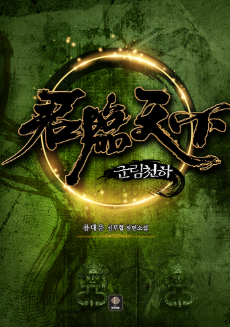 Cover image